


Wimbledon ’76: ‘Admiration, Respect, and Boredom’

Those who find beautiful meanings in beautiful things are the cultivated. For these there is hope. They are the elect to whom beautiful things mean only beauty.
The Picture of Dorian Gray
The “scribe of tennis,” Gianni Clerici, with his inexhaustible thirst for beauty, belonged to that select circle of the chosen few. Delicate flourishes and elegant embellishments appealed to his aesthetic sensibility, while drop shots and volleys populated his sweetest dreams. From the dance-like grace of the “divine” Suzanne Lenglen to the “rounded, inspired strokes” of Maria Esther Bueno, by way of Justine Henin‘s artistry and John McEnroe‘s feather-light touch, it was in those soft, velvety strokes that the true essence of tennis resided. By contrast, an exclusive reliance on brute force betrayed a lack of style and sophistication, as well as a brand of tennis that was monotonous and all too mechanical.
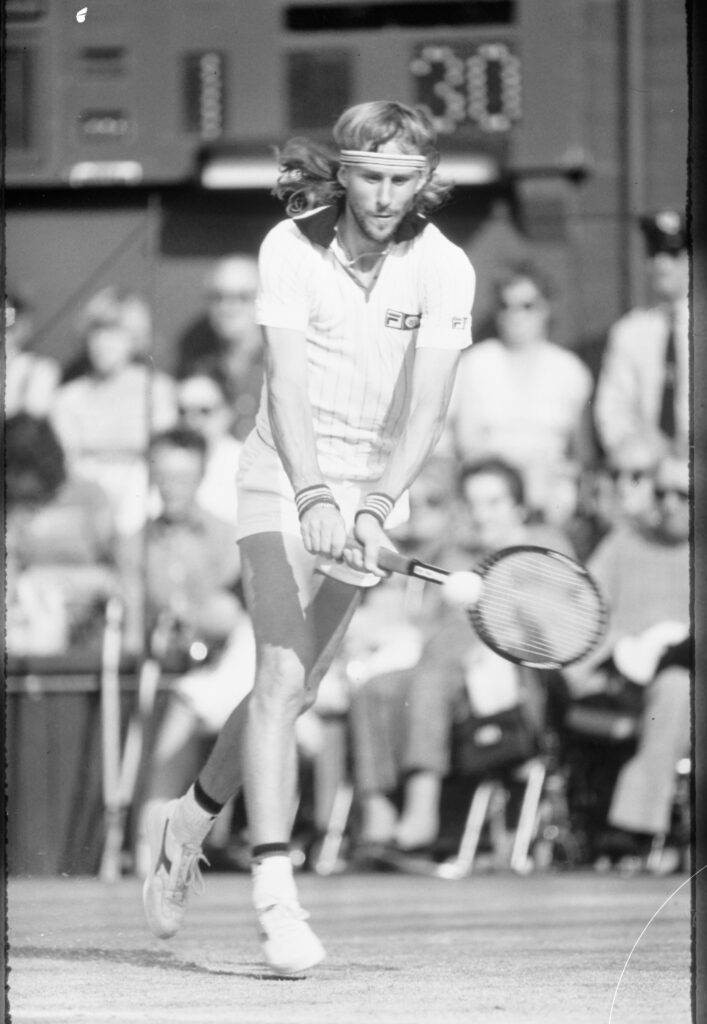
The age-old clash between grinders and racket artists gives us the perfect opportunity to commemorate the 50th anniversary of a historic final—one that marked the first Wimbledon triumph of the rising star of world tennis, Björn Borg, and the beginning of an extraordinary winning legacy.
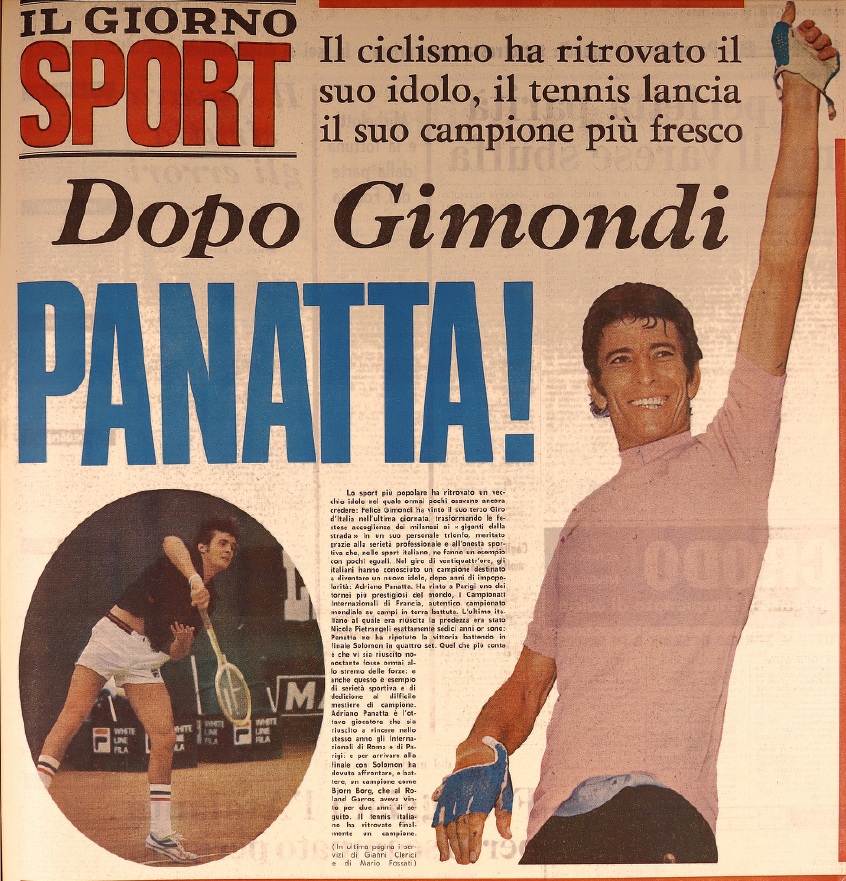
But let’s take a step back. The year was 1976, widely regarded as Adriano Panatta‘s annus mirabilis. That season marked the Roman’s definitive breakthrough on the international stage, and he achieved it in spectacular fashion.
On May 30, he captured the Italian Open, defeating Argentina’s Guillermo Vilas in four sets. Two weeks later, on June 13—the day after Felice Gimondi claimed his third and final Giro d’Italia title—Panatta overcame American Harold Solomon in the Roland Garros final to win the only Grand Slam title of his career.
Despite the remarkable form that would eventually culminate in Italy’s Davis Cup triumph in Santiago, Chile, that December, Panatta found little fortune in London. Although he arrived at Wimbledon as the No. 5 seed—behind only Arthur Ashe, Jimmy Connors, Ilie Năstase, and Björn Borg—the Italian suffered a bitter third-round defeat, bowing out of the tournament after being edged in five sets by American Charlie Pasarell.
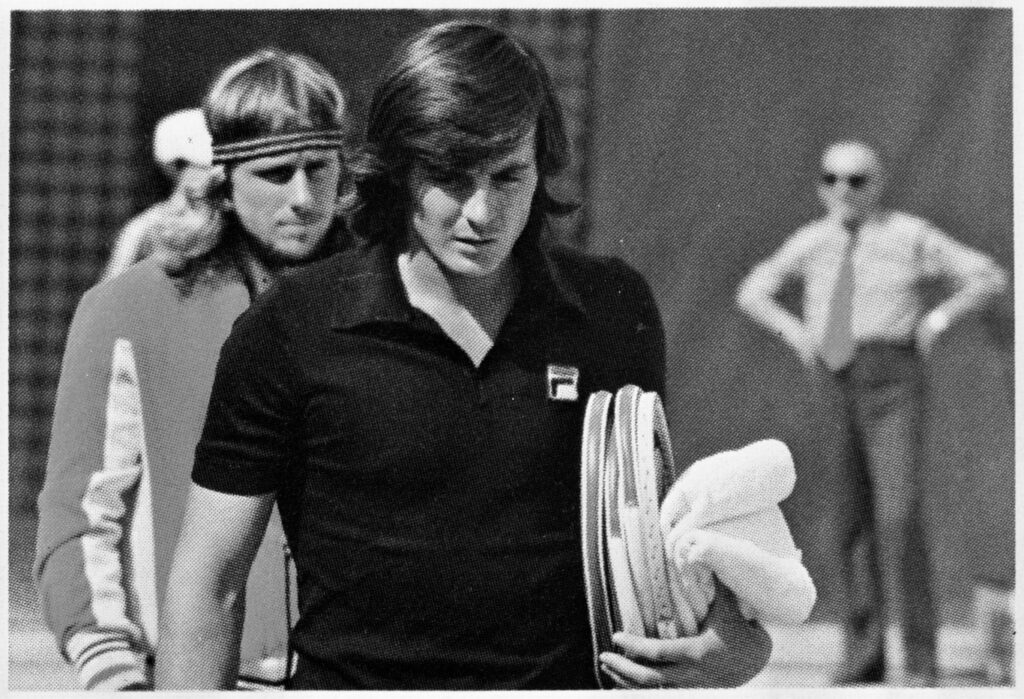
With the arrival of the quarter-finals, the draw became heavily unbalanced. On one side, a virtually clear path to the final appeared to be opening up for Romanian Ilie Năstase, who duly lived up to expectations, comfortably dispatching Pasarell and Ramírez. On the other side of the draw, however, all the top seeds were still in contention for the ultimate showdown on Centre Court.
For twenty-year-old Swede Björn Borg, the road to glory was therefore far more demanding and treacherous: the formidable Vilas awaited him in the quarter-finals, followed by American Roscoe Tanner in the semi-finals, nicknamed “The Rocket” because of his thunderous left-handed serve.
As it turned out, though, the blond “Viking” made short work of both challengers, reaching the final against Năstase without dropping a single set along the way. The headline of Gianni Clerici’s article for the semi-finals (Il Giorno, July 1, 1976) leaves little doubt about who his favourite was heading into the final showdown: “The Artist versus the Blacksmith in the Final”:
Two clay-court players—an artist and a blacksmith—are in the final of a tournament played on straw.
Năstase has kept his quirks under control, resigning himself to briefly insulting the more short-sighted line judges and the most persistent photographers, often in Italian. […] Despite the fact that grass does not excite him, and “straw” even less so, today he produced the most unexpected shots, varying his spin in astonishing fashion, as if he were wielding a fan. […]
The other match, between the Swedish blacksmith and the expert in rocketry (Ed. note: Roscoe Tanner), seemed not entirely dissimilar, although far rougher and infinitely less fascinating. […] After the match, Borg continued to claim, paradoxically, that he was suffering from a slight stomach ache, and one of his close associates assured me that he had taken to the court after yet another injection. The story risks becoming comical, and, should Borg win, one can only await some kind of certificate proving his inability to lie.
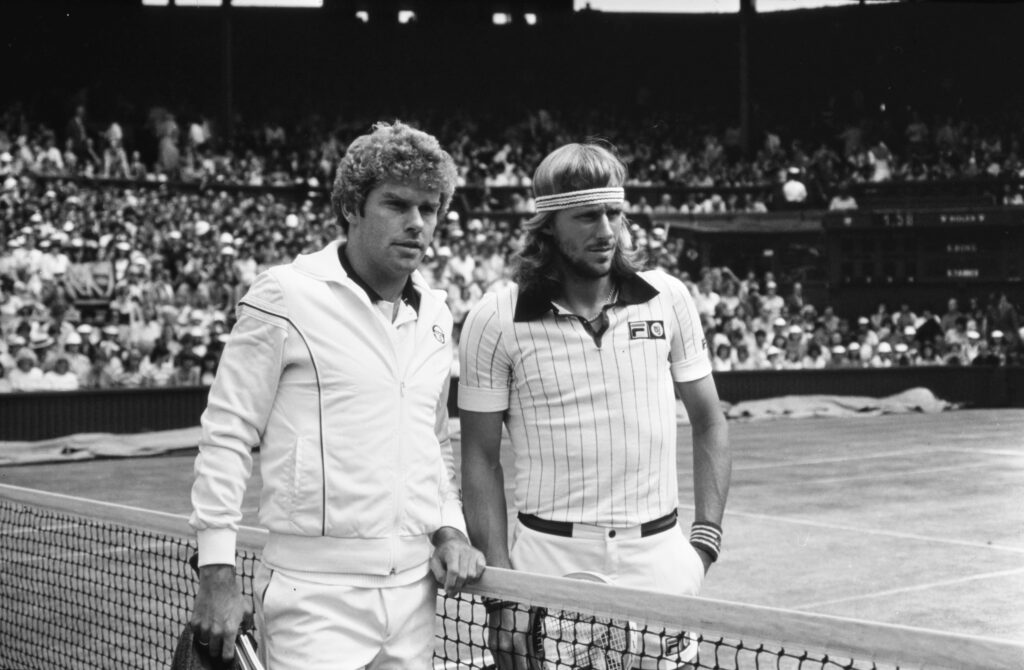
And so, it was time for the final: Borg’s first appearance in a Wimbledon final, Năstase’s second. The Romanian had already experienced the atmosphere of Centre Court in 1972, when he was defeated in five sets by American Stan Smith. The very same Stan Smith who, in October of that year, would once again shatter Ilie’s dreams by preventing Romania from lifting the Davis Cup trophy on home soil:
It had happened before, precisely in Bucharest, in October 1972. Năstase had the great opportunity to win the Davis Cup within his grasp. He stepped onto the court, and the crowd greeted him with long, adoring applause. He got going, produced a few shots beyond the reach of ordinary mortals, and then, all of a sudden, faced with the first barrages from Stan Smith, he faded away like a candle in the wind: 9–7, 6–2, 6–3.
Today, the story repeated itself, and it must have seemed like a waking nightmare to Ilie. The favourite—indeed, given odds of just one-to-two—after Borg had endured three cortisone injections at noon, Năstase initially received a warm ovation and began the match as if he were playing on home soil.
“Artist Destroyed”: that was the headline chosen by Gianni Clerici on July 3. The 1976 Wimbledon final was yet another disappointment for Năstase, who had no answer and was forced, reluctantly, to make room for the unstoppable rise of the young Swedish champion Björn Borg, who would go on to win the next four editions of the London tournament, setting a landmark record.
As the headline suggests, Clerici’s empathy for the Romanian’s struggles was matched only by the cold detachment he felt towards the “Swedish lumberjack”:
Năstase had shown no visible signs of collapse. He limited himself to nervously kicking up clumps of grass, firing a ball at an offending ball boy, and overdoing the touch game, lingering before coming to the net. Something, however, must have broken inside the childlike soul of that poet. […]
The Romanian usually possessed one of his finest weapons in the approach volley and half-volley off the backhand. Against those messy, awkward balls, however, Ilie was forced to lift the trajectory of his volleys, when he did not miss them altogether. […]
Borg unleashed first serves, Borg found the time to attack from the left with his forehand, Borg passed with two-handed strikes—down the line into the corner, and cross-court shots struck at almost wicked angles. Forced into the role of the supporting actor, Năstase tried in vain to slow the game down, to slice and carve up the ball, to mock his opponent with counter-attacking touches, perhaps only after losing three or four points.
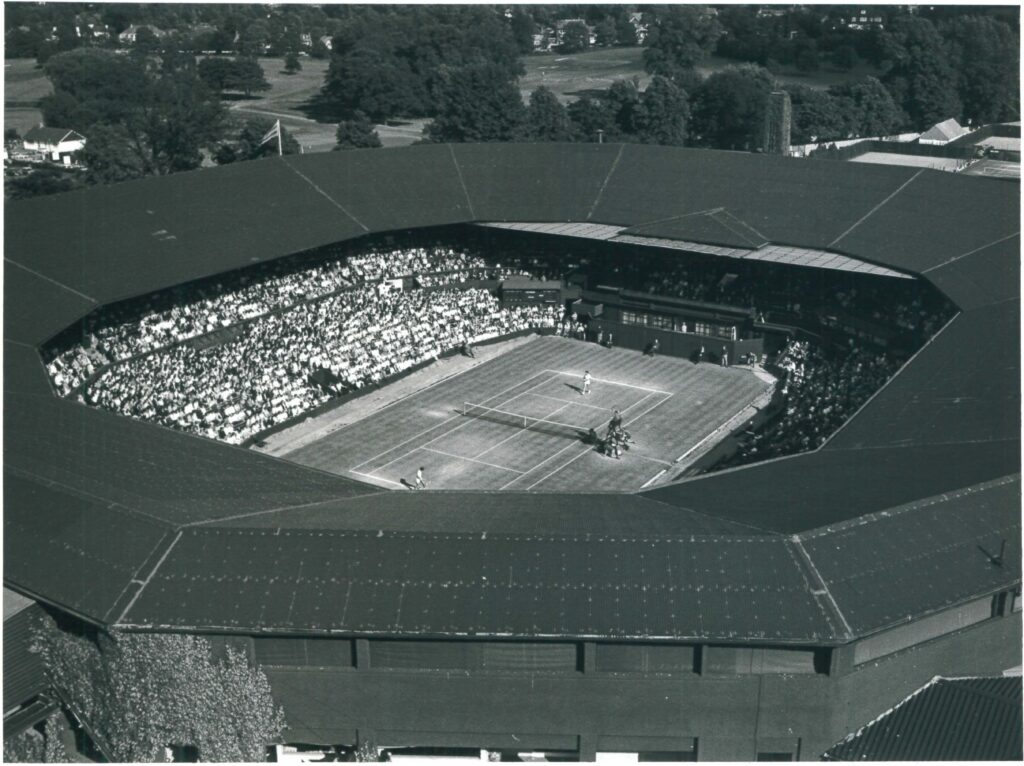
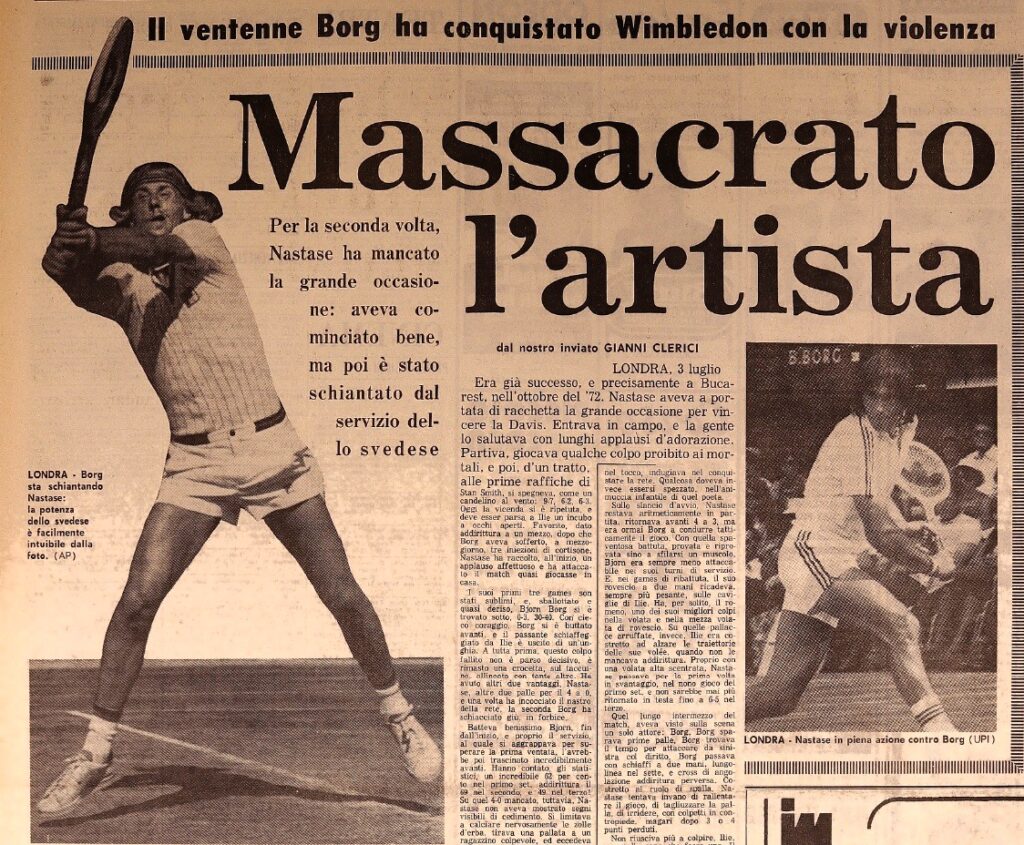
A heartbreaking ordeal for Năstase, a routine task for Borg: 1 hour and 47 minutes of Scandinavian dominance, enough to shape the final scoreline of 6–4, 6–2, 9–7.
On one side, a twenty-year-old winning Wimbledon—the first of five consecutive titles—without dropping a single set to his opponents; on the other, a thirty-year-old watching his last great opportunity slip away.
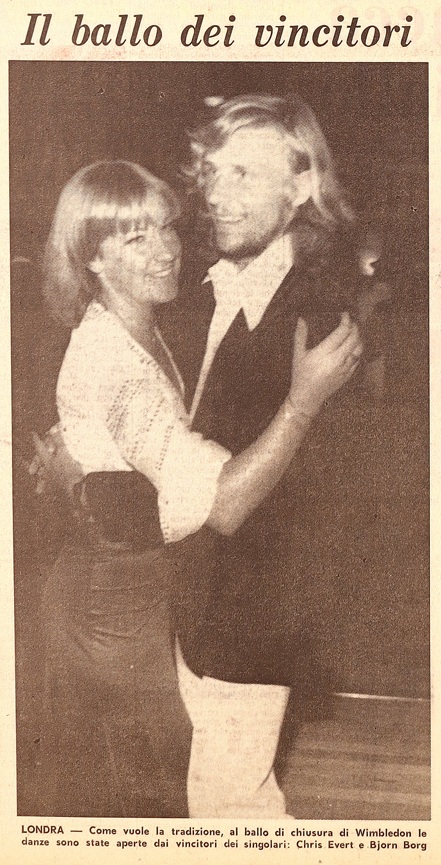
The following day, with the famous “winners’ dance” (known to Anglo-Saxon circles as the “Champions’ Dinner”) between women’s singles champion, twenty-one-year-old American Chris Evert, and the blond-haired Borg now also consigned to the archives, Gianni Clerici allowed himself further reflections on what had unfolded, making no attempt to conceal either his impressions or his sarcasm, as demonstrated by the title he chose for his piece: “Admiration, Respect and Boredom”:
And here comes Björn Borg, certainly no ordinary child prodigy, and certainly stronger than the two who came before him. He has won without dropping a set. He has played with a torn muscle and, in his little stomach, enough sedatives to treat an appendicitis. […]
Borg is something new, something different from the old champions of sport; he resembles a downhill skier or a racing driver. He either arrives at the finish line—or he crashes. And so he has raced on, patched up, yet faster and faster. He served like a pneumatic drill, he adapted his fearsome topspin passing shots to the scorched grass. Finally, he invented a two-handed sliced approach shot, something I had never seen from him before: behind that two-handed slice, Björn was relentless and lightning-fast in reaching the net. […]
I understand that, at this point, I should perhaps feel at least a little enthusiasm, alongside my respect for this remarkably mature teenager. I cannot do so, and I admit that I regret it. Borg’s game does not, unfortunately, belong to the classical tradition that I revere as an aficionado. His points are born of power before touch, of mechanical precision before inspiration. That is why I supported Năstase—and I see no reason to be ashamed of admitting it, as some readers have reproached me for doing. […]
Unfortunately, I am not one of those English girls who pin portraits of Borg to their chests in the shape of flowers, who are capable of fainting at the sight of him, or of being enthralled by his silences. Perhaps journalists, especially sports journalists, should be changed from time to time, just as champions on the stage are replaced. I am here, regretting that Năstase did not win, when I should instead be delighted, celebrating alongside the Vikings. […]
Borg inspires esteem, admiration, and respect in me, I repeat. And at the same time, a profound unease and, let us say it plainly, a considerable boredom.