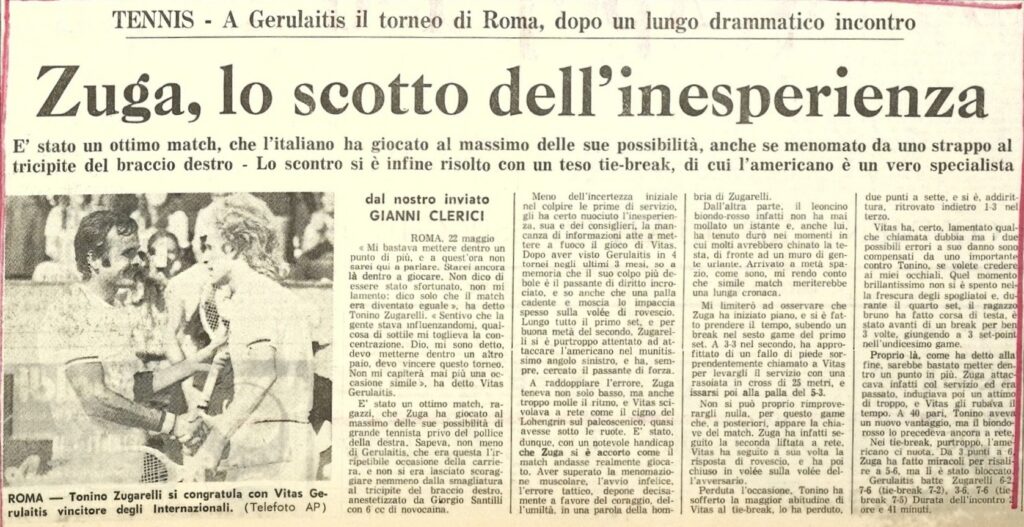



Zuga, the Price of Inexperience
Rome, May 22, 1977. Final of the Italian Open.
Vitas Gerulaitis (US) defeated Tonino Zugarelli (IT): 6–2, 7–6, 3–6, 7–6.
I just needed to make one more point, and I wouldn’t be here talking now.
I’d still be out there playing.
I’m not saying I was unlucky, and I’m not complaining:
I’m only saying that the match had become evenly balanced.
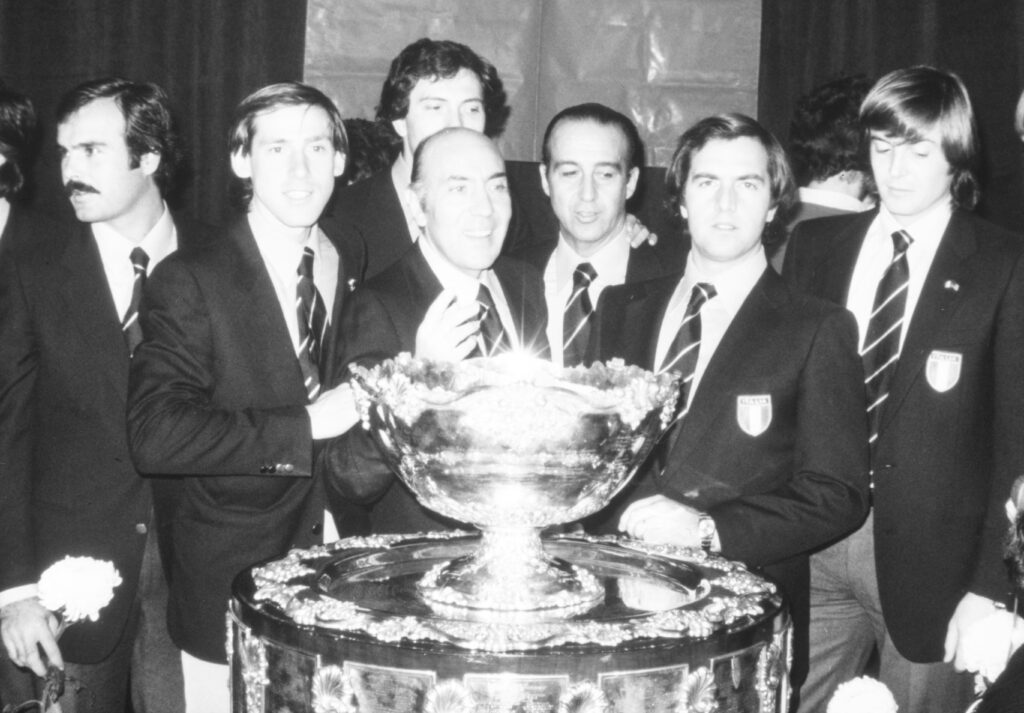
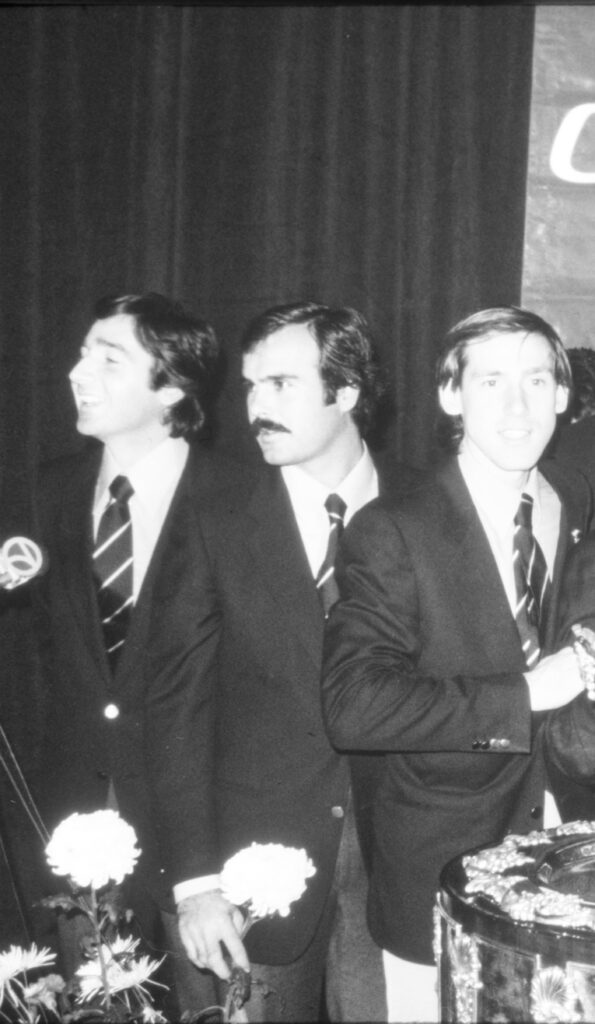
This was the immediate reaction of the defeated player, expressed with a hint of melancholy, at the end of the 1977 Italian Open final. The man speaking was Antonio Zugarelli — “Tonino” to everyone — one of the “four musketeers” of Italian tennis, who only five months earlier (on December 19, 1976) had lifted the Davis Cup in Santiago, Chile. The contribution of Zugarelli, a tireless player endowed with a crisp forehand and remarkable mobility, had proved invaluable especially in the semifinal against England, where he secured two crucial points against Roger Taylor and John Lloyd.
For Tonino, that final at the Foro Italico, played in front of his fellow countrymen, was the opportunity of a lifetime in a tournament where he had never gone beyond the round of sixteen. His opponent, the New Yorker Vitas Gerulaitis — born Vytautas, the son of Lithuanian immigrants who had settled in Brooklyn — was certainly a rising star, but not yet an insurmountable obstacle, although in that “magical” 1977 he would go on to win his only Grand Slam title in Melbourne, precisely against the already mentioned John Lloyd. For Gianni Clerici, a former high-level player and a constant presence on the tennis circuit as a reporter, the fiery-haired American was already someone to watch, even if, in his opinion, he still displayed glaring weaknesses, as can be read in his report on the final published in Il Giorno the day after the match:
Having watched Vitas Gerulaitis in four tournaments over the last three months, I know by heart that his weakest shot is the cross-court forehand passing shot, and I also know that a soft, dropping ball often puts him in difficulty on the backhand volley.
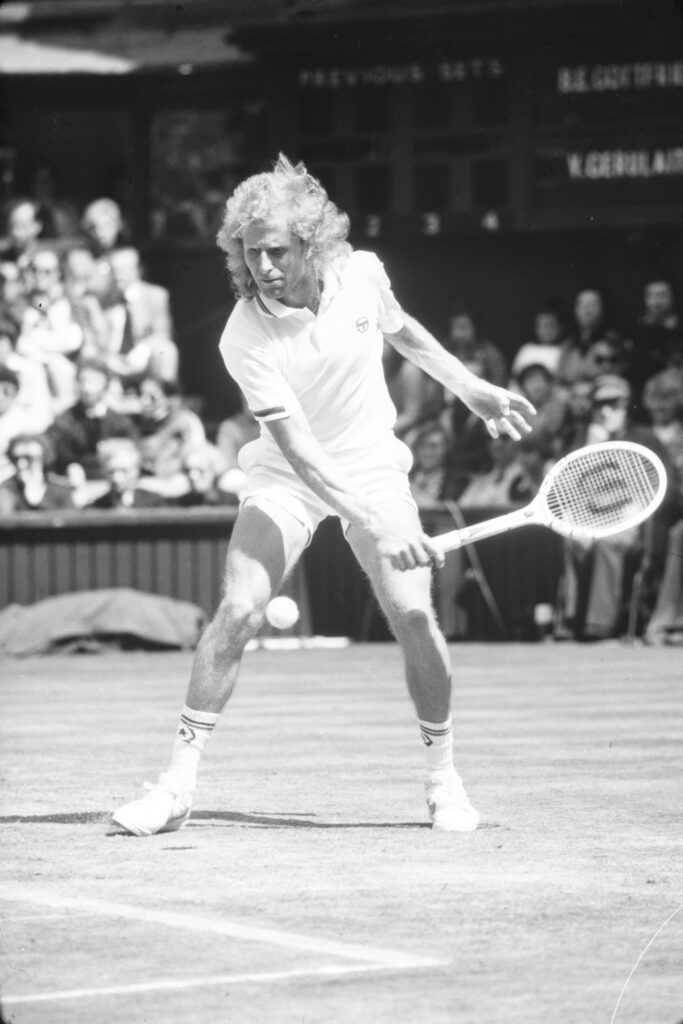
In short, according to Gianni Clerici, the characteristics of the “blond-red little lion” left openings that a shrewd and well-prepared opponent could have exploited — qualities that, in his view, were missing from Zuga’s repertoire. This was reflected in the title of the article itself, which spoke of the “price of inexperience,” a flaw that led the Italian to stubbornly crash against the strengths of his rival, whose sliced backhand was outstanding:
Even more than the initial uncertainty in landing his first serves, what certainly harmed him was the inexperience — both his own and that of his advisers — and the lack of information needed to fully understand Vitas’s game. […]
Throughout the entire first set, and for a good half of the second, Zugarelli unfortunately kept trying to attack the American on his extremely well-defended left side, and consistently attempted the passing shot with sheer power. To compound the mistake, Zuga kept the pace not only low, but also far too soft, and Vitas glided to the net like the swan in Lohengrin crossing the stage, as if he were on wheels.
With this Wagnerian reference, the “scriba’s” affectionate invective came to a close, as he criticized Tonino Zugarelli’s tactical approach, before quickly making room for praise expressed through the use of the word “hombría” (courage, integrity), a classic attribute of the bullfighter — a figure much admired by Gianni Clerici, who was himself an aficionado of bullfighting.
Having overcome his muscle injury, the unfortunate start, and the tactical mistake, this clearly speaks in favor of Tonino Zugarelli’s courage and humility — in a word, his hombría