



Gianni Clerici: The Author’s Backhand
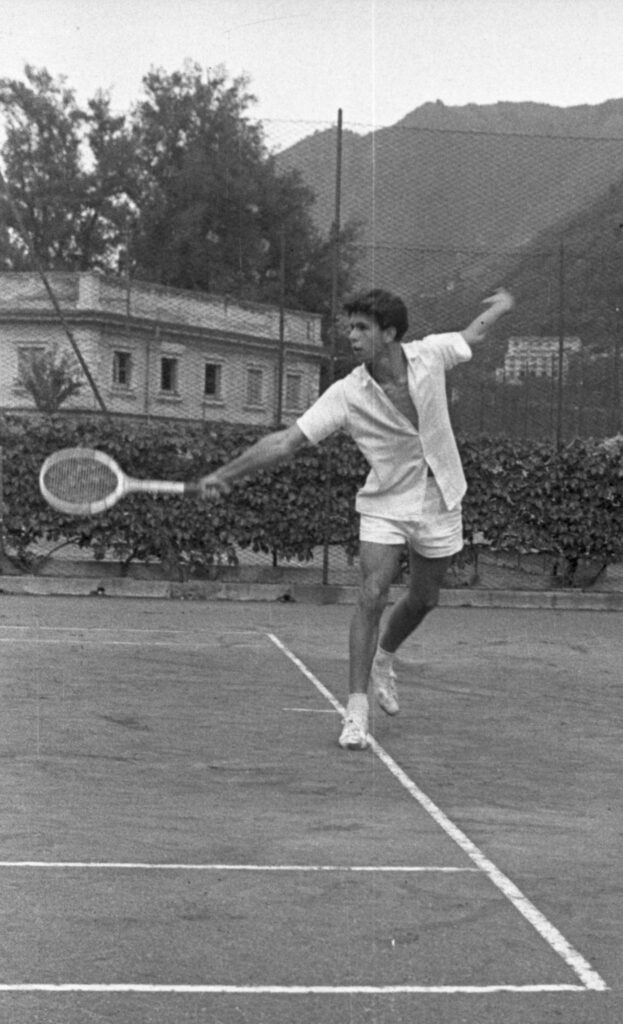
If Gianni Clerici’s writing style were a tennis shot, it would most likely be a backhand passing shot that catches everyone off guard, landing right on that elusive boundary between the sideline and the clay — a spot Gianni himself called the “semiriga.”
And so, in that subtle poetic limbo—halfway between inside and outside, between genius and madness—the Catholic University has managed to step in with impeccable timing, offering a welcoming home to that orderly jumble of books, photographs, letters, and posters that makes up the late Clerici’s book and document collection. Not just a home, but also a sounding board: the Raccolte Storiche Documentation Center, which has taken on the task of managing and cataloging the materials, will in fact be dedicated to promoting this heritage in the years to come. And what better way to take the first step in that direction than to organize an event with those who actually lived through it alongside Gianni? It was with this aim in mind that the event Gianni Clerici: il racconto del tennis (Gianni Clerici: The Story of Tennis) was organized; it took place in the Aula Magna in Brescia on December 15: a gesture of good will, a sign of presence and awareness. The evening was moderated by Pierangelo Goffi, who, in his capacity as head of the Library at the Brescia campus of the Catholic University and of the Historical Collections Center, presented the event and introduced the speakers.
After an opening segment in which Professor Rognoni described the circumstances that led to the collection’s arrival at our university, the conversation evolved into a free-flowing exchange of memories and anecdotes, ultimately painting a sincere and heartfelt portrait of the tennis chronicler. It is impossible to talk about Clerici without thinking of Rino Tommasi, his commentary partner for many years: Elena Pero and Ubaldo Scanagatta—who themselves delivered memorable commentaries, paired with Paolo Bertolucci and Roberto Lombardi, respectively—highlighted the innovative aspect of the format (before Rino and Gianni, in fact, matches were narrated by a single voice), as well as the great humanity Clerici brought to the booth, whose anecdotes and stories had earned him the affectionate nickname “Dottor Divago” from his friend Rino. These distinctive traits were also highlighted by Claudio Mezzadri, a former professional tennis player and commentator himself, who attributed Clerici’s unconventional style to his immense talent as a writer. Mezzadri has been a connoisseur of talent ever since 1999, when, as captain of the Swiss Davis Cup team, he “mentored” a Roger Federer—who was not yet of age—on tennis’s most prestigious stage.
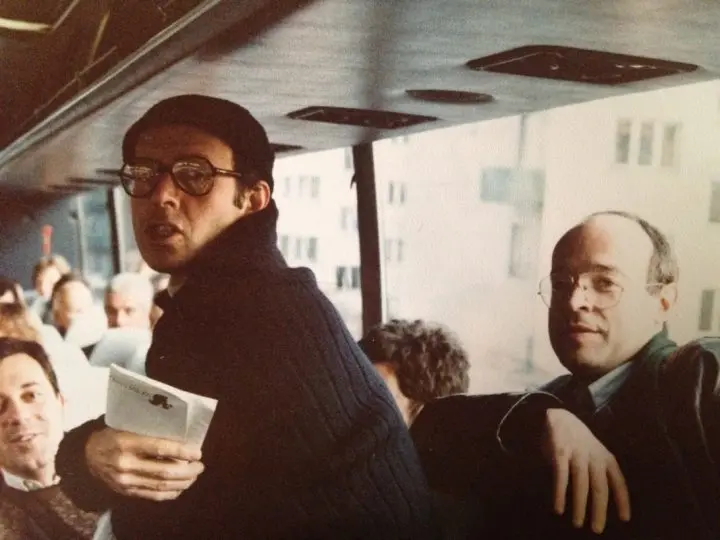
Snippets from the life of Clerici the journalist, a point of reference and example for all his colleagues, came instead from the words of Carlo Annovazzi, chief editor of Repubblica Milano, and Stefano Semeraro, Editor-in-Chief of Il Tennis Italiano, two publications for which Clerici published countless articles over the years: from his debut in 1948 precisely in the specialized magazine then directed by Umberto Mezzanotte, up to his latest contributions to the Roman newspaper, among which stand out the enthusiastic commentaries on the early achievements of a young red-haired player from Trentino, Jannik Sinner, who last November, 47 years after the Italian feat in Santiago, brought the tricolor back to the top step of the Davis Cup podium.
Giuseppe Cosio