



The All “Czechland” Lawn Tennis Club
The 2026 edition of the Championships featured an all-Czech women’s singles final between Karolína Muchová and Linda Nosková, with the latter prevailing 6–2, 5–7, 6–3. What made the occasion particularly remarkable? Both players, born in Moravia, the historic region of the Czech Republic, contested the first all-Czech Wimbledon final since 2009, when the all-in-the-family showdown between the Williams sisters ended with Serena defeating Venus to avenge her loss to her older sister in the previous year’s final.
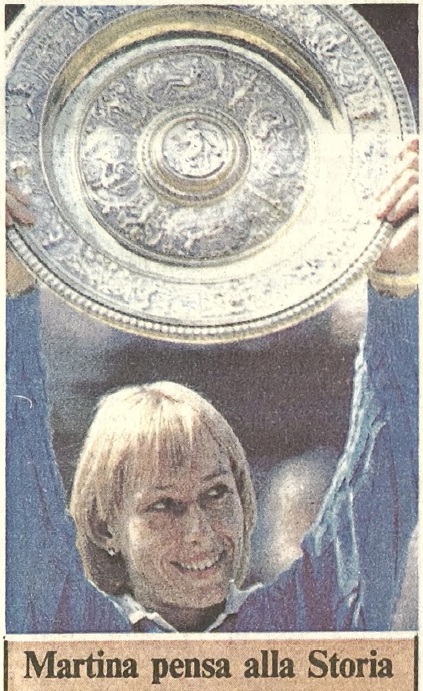
The parallels do not end there. The 1986 Wimbledon final was also contested by two Czechoslovak players—more specifically, two women from Bohemia. On that July 5, forty years ago, the Queen of the Championships, Martina Navrátilová (still the record holder with nine Wimbledon singles titles), faced compatriot Hana Mandlíková, a four-time Grand Slam champion and the only player capable of mounting a credible challenge to the Navrátilová-Evert duopoly during an era when the two great rivals dominated the women’s tour.
The extent of that dominance is best illustrated by the fact that Mandlíková’s victory over Navrátilová in the 1985 US Open final brought to an end a remarkable streak of 15 consecutive Grand Slam titles won by either Navrátilová or Evert—a run that had spanned four uninterrupted seasons.
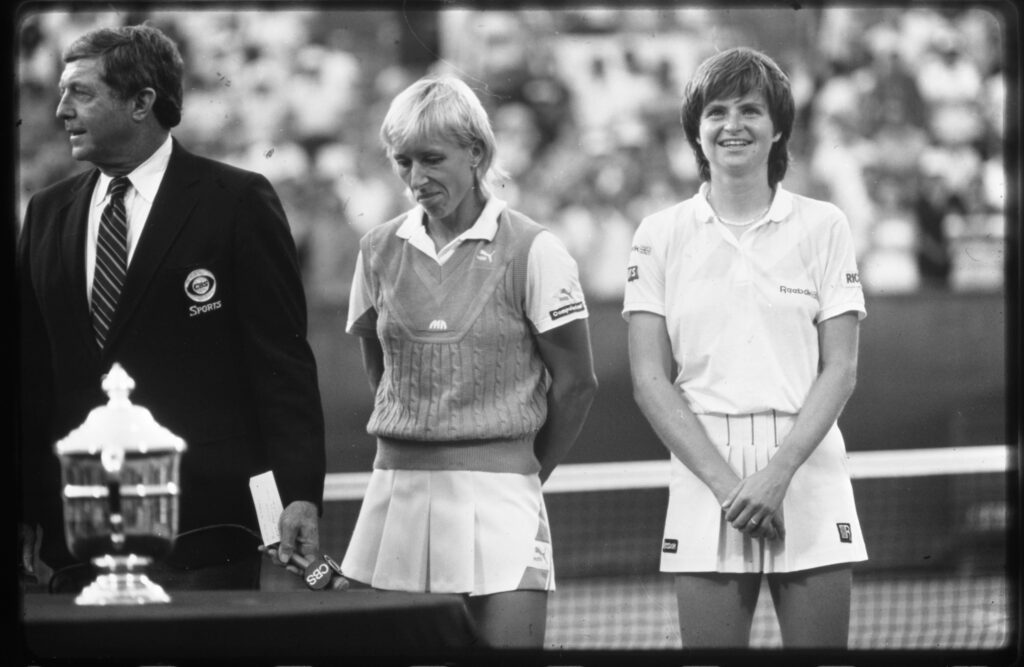
Forty years on, we look back at that all-Czechoslovak Wimbledon final, where Navrátilová emerged victorious 7–6, 6–3, through a selection of excerpts from Gianni Clerici‘s match report, published in the Italian daily Il Giorno on 6 July 1986.
Had Suzanne Lenglen not eaten contaminated oysters in Barcelona in the spring of 1924, Martina Navrátilová might have spared herself a few tears—and a good deal of theatrics—yesterday. By defeating Hana Mandlíková for the nineteenth time, Martina also equalled the record of five consecutive Wimbledon titles that had belonged exclusively to the divine Suzanne. Lenglen won the Championships every year from 1919 to 1923, then turned yellow from oyster poisoning, before returning to claim the title again in 1925, prior to turning professional. Yesterday, the 1924 champion Kitty McKane told me she would never, ever have stood a chance against The Divine, who would almost certainly have gone on to win something like seven Wimbledons in a row.
Martina, in fact, began the match visibly trembling, as though beneath her rather ungenerous breasts there beat the heart of a frightened rabbit. Hana, by contrast, seemed to float across the court on the light feet inherited from her father, Mandlík, who could cover the 100 metres in 10.02 seconds. Mandlíková’s stroke production was the finest in the game: struck with almost no spin at all, her shots skimmed away after the bounce like a flat stone skipping across the surface of a lake.
The damp grass offered little extra resistance and, in the blink of an eye, Hana had broken serve, thanks to three return winners so spectacular that they kept the BBC cameramen busy replaying them again and again. The dominance of serve quickly carried the score from 3–0 to 5–3. Over Centre Court, now blanketed by grey clouds, silence descended together with a light north-westerly breeze.
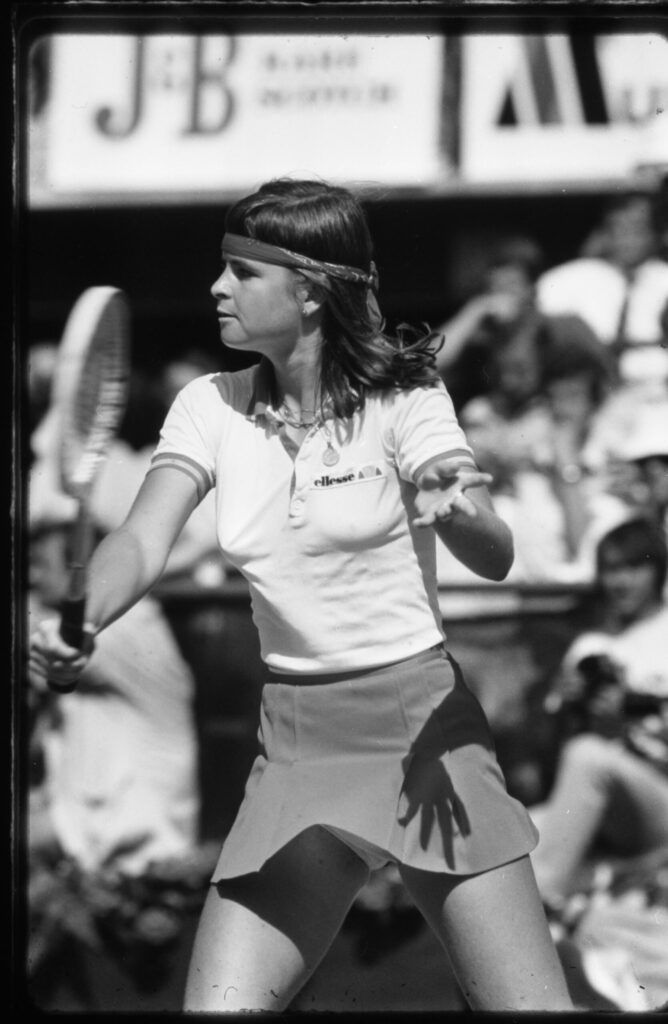
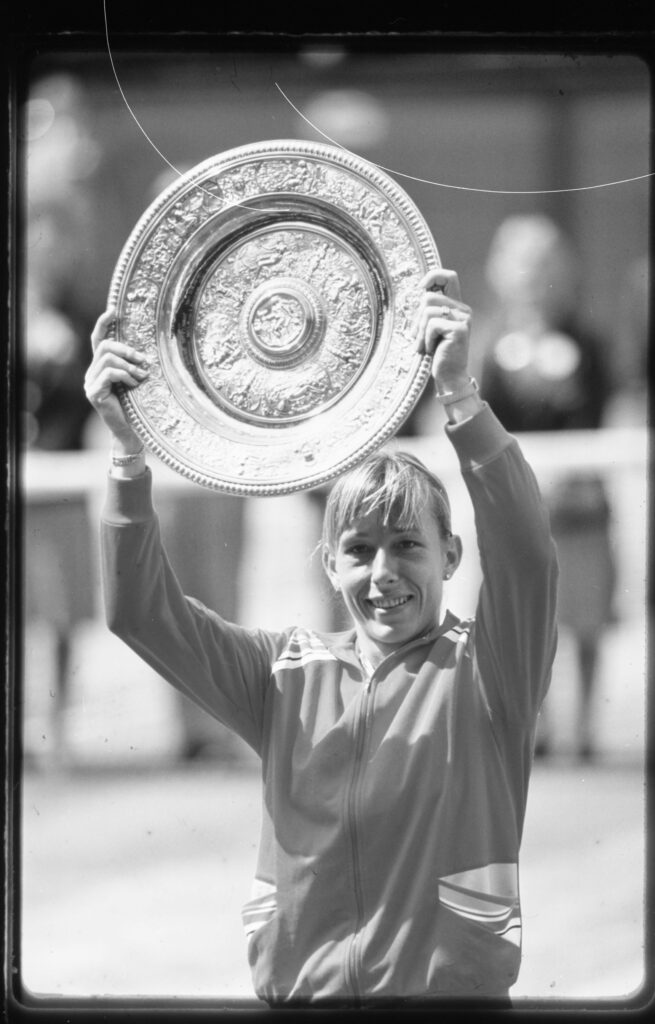
By the time the tie-break arrived, Martina carried herself with the confidence of someone who had finally escaped the trap. Hana, meanwhile, lost her composure in a futile argument with the electronic line-calling system, which had failed to call one of Navrátilová’s disputed aces out. Martina swept the tie-break 7–1 and, after securing another break in the fourth game of the second set, surged towards victory, delayed only briefly by two unsuccessful break-back points in the eighth game.
Martina (who earned 290 million pounds yesterday, taking her career prize money beyond the 10-million-dollar mark) could blow kisses from the court to her wife, seated in the stands alongside her mother-in-law and sister-in-law. The next milestone is the eight Wimbledon titles won by the eighty-one-year-old Helen Wills, who, from her Californian home, sent a congratulatory telegram with great elegance and style.
But, when you think about it, this whole story of Navrátilová’s supremacy is beginning to become a little tiresome. Why not force her to enter the men’s singles tournament next year?
Clerici’s article ends with this provocative remark, which echoes the famous “Battle of the Sexes” held in 1973, when Billie Jean King—twelve-time Grand Slam singles champion and a leading advocate for women’s rights and equality in sport—defeated former world No. 1 Bobby Riggs, an outspoken sexist, in straight sets.
Turning instead to more recent events, at the end of 2025 a match was staged in Dubai between world No. 1 Aryna Sabalenka and Australian Nick Kyrgios, a former world No. 13, in a contest played under highly unusual rules that looked like anything but a genuine tennis match.