


A gem from the depths: the story of Althea Gibson
“I always wanted to be somebody”
This is the title Althea Gibson chose for her autobiography, published in 1958, shortly after her second Wimbledon victory. It is certainly no secret that she succeeded in her endeavor: Gibson was, in fact, an eleven-time Grand Slam champion in singles, doubles, and mixed doubles. Yet, limiting ourselves to a mere list of the trophies on her shelf would be extremely reductive, considering the exceptional impact her legacy had on the world of sports and beyond. Althea Gibson was a true trailblazer, a “pioneer” as they say “back home,” much more than just a tennis player: the first African American athlete to compete in the U.S. National Championships (1950), what we now call the U.S. Open; the first to win a Grand Slam tournament, the 1956 Roland Garros; the first to reach No. 1 in the world rankings.
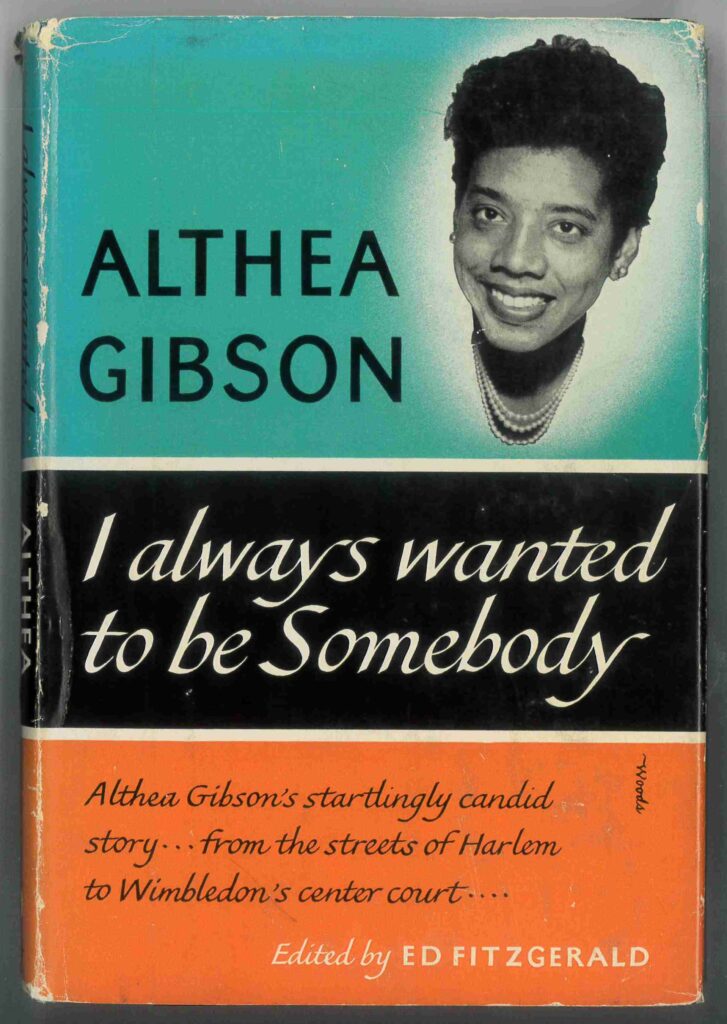

Below are some excerpts from “Althea Gibson. La prima nera a vincere Wimbledon” (Althea Gibson: The First Black Woman to Win Wimbledon), a profile written by Gianni Clerici in 1958 for the newspaper Il Giorno. The full text was republished in the book Wimbledon. Sessantacinque anni di storia del più importante torneo del mondo (pp. 54-57), published by Mondadori in 2018.

Chapter 1: the heart beyond the obstacle
Althea Neale Gibson was born in Silver (South Carolina) on August 25, 1927. Three years later, the family moved to Harlem, a neighborhood in Manhattan (NYC), which at the time was certainly not the easiest environment from which to break free. Moreover, the example set by her father did little to help her manage her emotions, so much so that little Althea tried to escape any form of constraint:
If she’d been born a boy, as Papa Gibson had hoped, Althea would have made it out of Harlem through boxing. Papa trained her anyway, driving his glove into her thin ribs; only the ban on women’s boxing made him give up coaching her, and from that moment on, he took it upon himself to whip her for every misstep.
She was whipped almost every day. Althea would show up at school for basketball or softball, and she spent her life on the sidewalks, stealing. To get to the Coney Island fair, she rented a bicycle, turned the corner, sold it to a cyclist, and hailed a taxi. She also liked visiting her uncles. They made bootleg alcohol, and on the way back, Dad would put down the belt to stick two fingers down her throat. If she’d really messed up, she’d slip into the subway and spend the night there, between Cortlandt Park and Lots Avenue.
Around the age of eleven, she realized that social services offered a dormitory with beds and real sheets, and she left the three-room apartment on 143rd Street, where the family had arrived from South Carolina, driven out by three measly cotton harvests.
That’s right, 143rd Street: fast-forward nearly a century, and today that street is called “Althea Gibson Way,” which was officially named on August 25, 2022—what would have been her 95th birthday—in front of a jubilant crowd:
In short, Althea had a rough childhood, marked by many odd jobs that she often found hard to bear:
She started working, taking on jobs as a cashier, a delivery person, an elevator operator, a factory worker at a button factory, and a chicken plucker. Gutting the birds didn’t disgust her at all. She was simply too hungry. From the last of these jobs—certainly the best—she was fired for not being able to resist the urge to listen to Sarah Vaughan, who was singing nearby. Sarah remained, along with Sugar Ray Robinson, the boxer, one of her lifelong idols.
Chapter 2: the appeal of the uniform
Sugar and his wife, Edna Mae, even became her friends; they always helped her out—he once bought her a saxophone. Another prominent figure, Buddy Walker, the director of the Harlem Society Orchestra, was the first to recognize her talent as a great player, having seen her playing paddle tennis—the game played with wooden rackets by poor children. Not only did Buddy give her a real racket with strings, but he also took her to the Harlem River Tennis Court and paid for her first lessons with Fred Johnson, the one-armed coach.
It was in this context that a decisive shift in Althea’s mindset took place; she discovered that the world wasn’t made up solely of enemies and annoyances, and that her energy could be channeled in the right direction:
Tennis wasn’t really my style, but the polite manners of the game—which had seemed ridiculous to me at first—slowly began to fascinate me. The same went for the pretty white outfits. My competitive nature got me into trouble, so much so that when a match was going badly, I’d stubbornly insist on fighting with my opponent. I realized, however, that a certain kind of behavior was required on a tennis court—in fact, it was demanded: so I decided it was best to stick to the script. After some time, I began to understand that I could step onto the court as an immaculate young lady, dressed in white, be kind to everyone, and still play like a tiger, smashing the ball. I remember imagining myself almost like a matador entering the arena. Dressed to the nines. Bowing in every direction. Following the sophisticated etiquette to the letter, but with nothing on my mind but to pierce the bull’s belly with that sword and end its existence once and for all. I must have gotten this image from some movie I saw.
[Quote from Althea Gibson, I Always Wanted to Be Somebody, New York: Harper & Brothers, 1958, p. 29. Translated by the author]
Chapter 3: obvious superiority

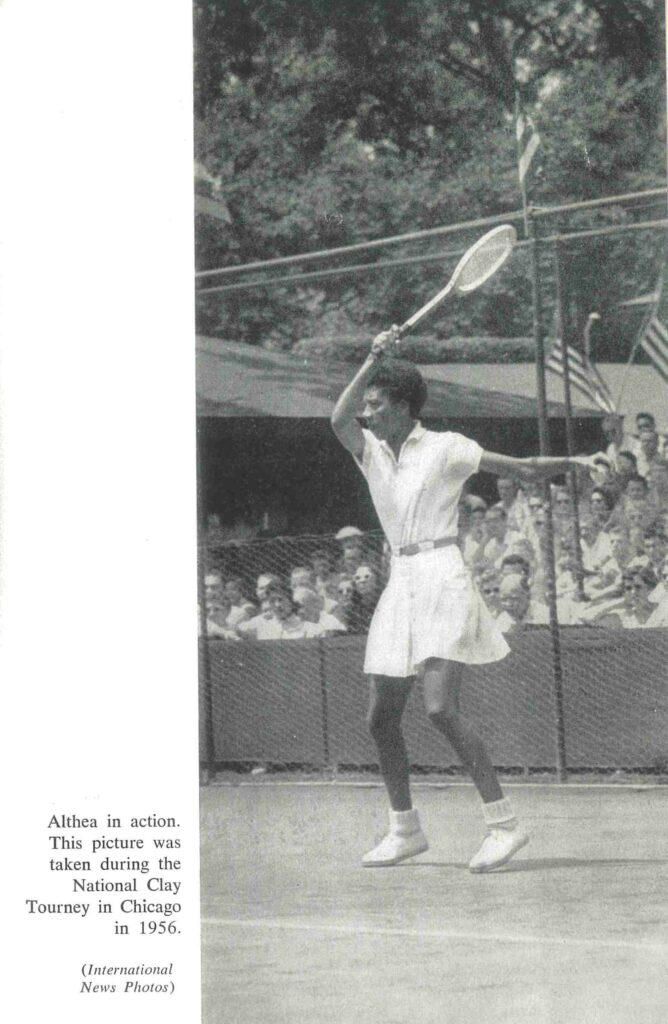
The seasons passed, and the precocious 12-year-old who had made a name for herself with wooden paddle tennis rackets blossomed into an extraordinary teenager, playing a fearless serve-and-volley game and overwhelming her opponents from her towering height of 5 feet 11 inches. The girl was making a name for herself, and before long, many would take notice. In those years, Black tennis players didn’t even have access to qualifying tournaments, let alone the U.S. national championships: there was even a separate federation for them, the ATA (American Tennis Association, which remains active today to promote integration and tolerance). The turning point came in 1950, when certain circumstances (and the arrival of a guardian angel) paved the way for Althea’s rise to the stages she rightfully deserved:
The daily discipline of school and the tennis court led Althea to success in the championships of the American Tennis Association, the Black tennis federation, and earned her a three-line mention in *The New York Times*.
Also in New York, she was entered in two indoor tournaments at the old Armory, and finished in the top eight both times. A white girl in her place would have been immediately discovered and courted by executives and universities, journalists, and tournament organizers. Althea had to wait for Alice Marble [ed. note: a former white player] to attack the establishment with a scathing article in *American Lawn Tennis* that began: “What do you think of Gussie Morgan’s panties?” Those lamé-woven garters were a less uncomfortable topic than the conspiracy against Althea.
Marble’s support gave her courage, prompting her to submit a new application, which was promptly rejected. Unexpectedly, help came from the Orange Lawn Tennis Club, a club with a long tradition, and the process began, eventually leading her to Forest Hills, the first Black girl in the white women’s locker room and, soon, on the pristine green courts.
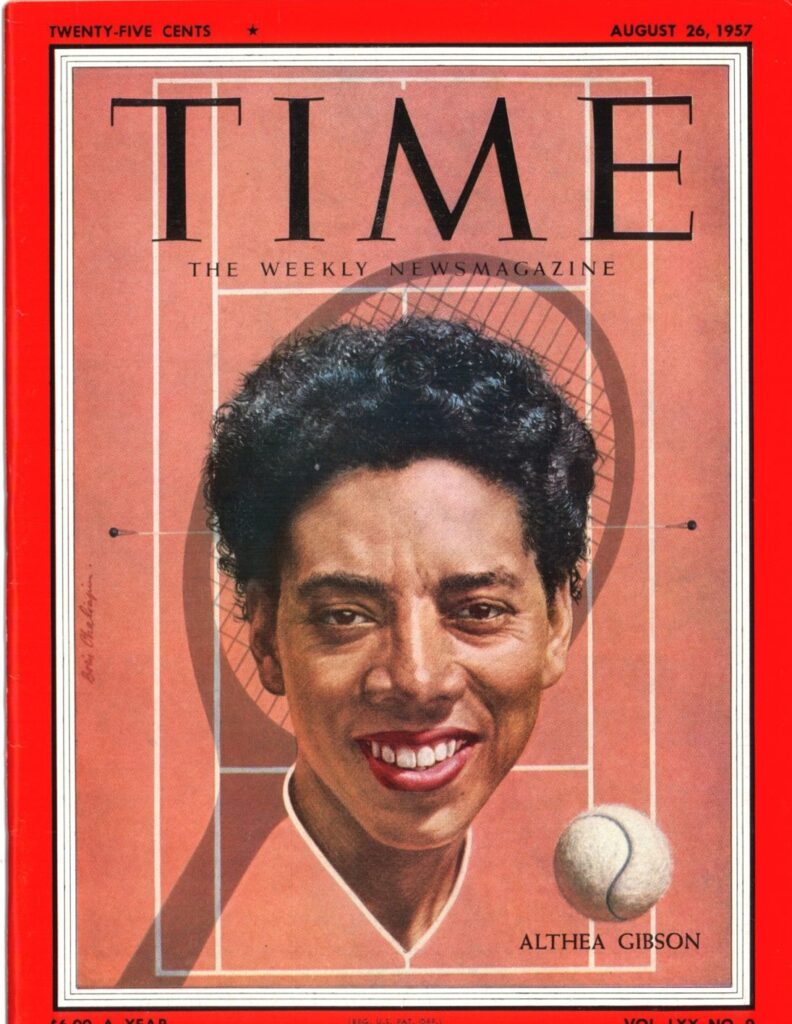
Her debut caused quite a stir, making headlines in local and international newspapers, just as Jackie Robinson’s debut with the Brooklyn Dodgers in Major League Baseball had in 1947. In the years that followed, Althea’s career struggled to take off, until the fateful year of 1956, when a golden era began, seeing her win, in quick succession, Roland Garros (1956), two Wimbledon titles (1957–58), and two U.S. Nationals (1957–58), landing on the cover of Time Magazine first and then Sports Illustrated:

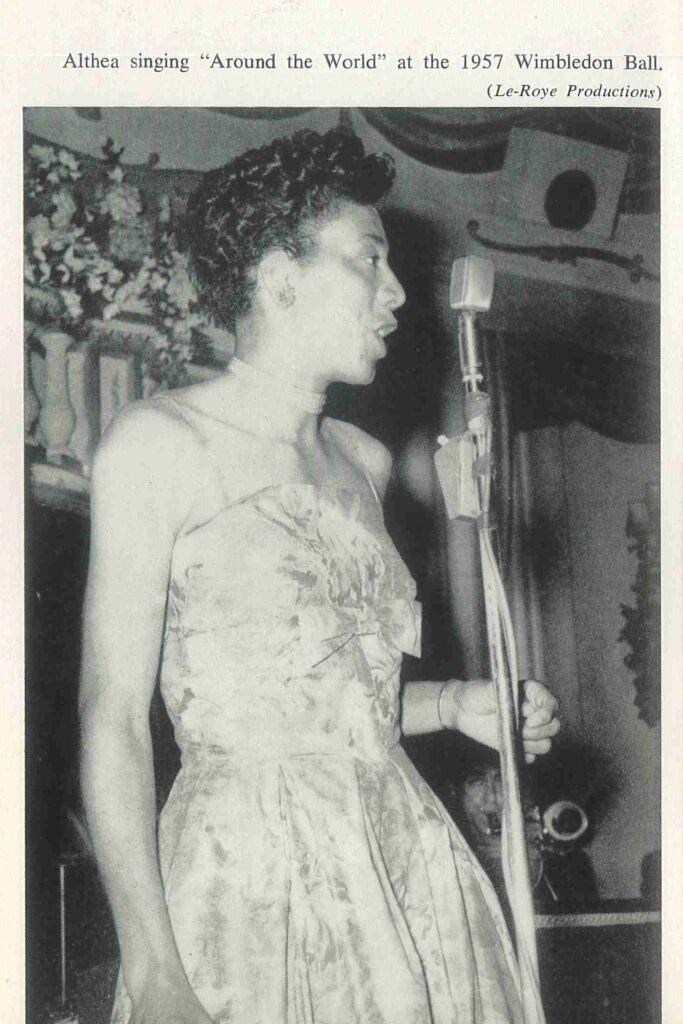
Her first major tournament was Rome, followed by Paris, and finally, despite the frosty reception from the crowd, Wimbledon. Althea served harder and attacked earlier than Darlene Hard, a young American player dressed in white and pink who was a powerful player. She won in fifty minutes, gave a graceful curtsy to Queen Mary, and chatted amiably with her. That evening, she rehearsed the speech she had memorized quite well, let herself be persuaded to sing two songs with her polished, professional voice, and finally threw herself into dancing.
“There is a long way,” she wrote, “between dancing with the Duke of Devonshire and being thrown out of a bowling alley in Jefferson City, Missouri, because of the color of your skin.”
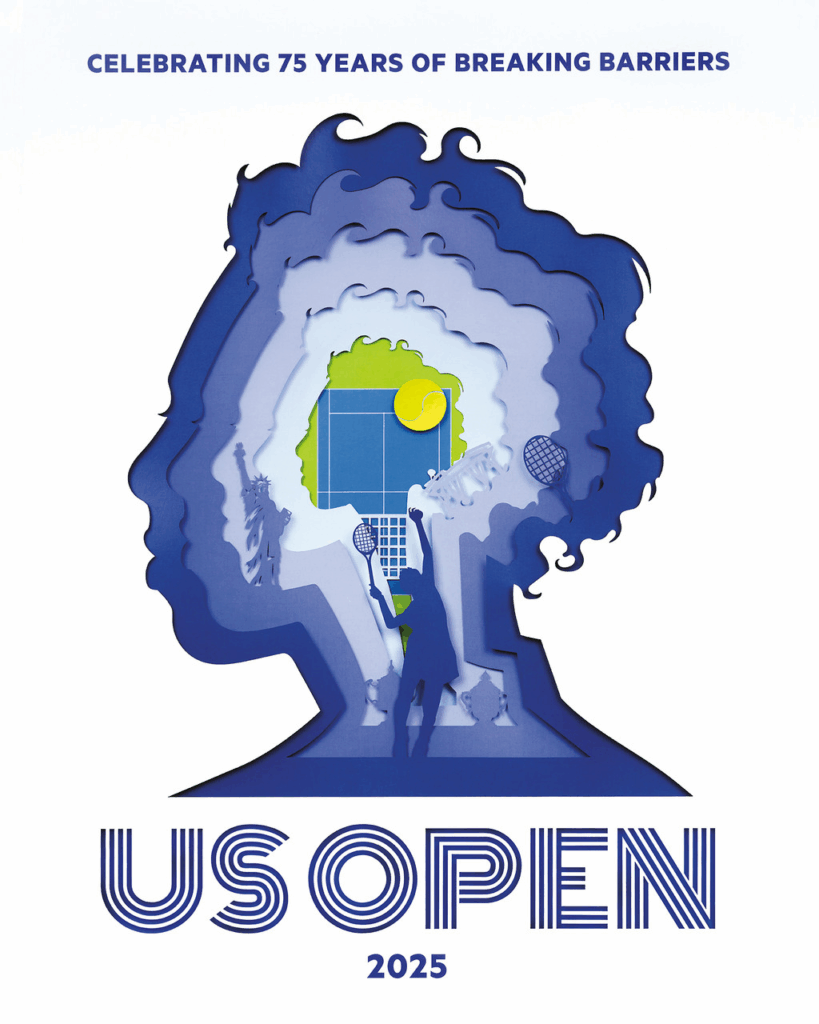
Returning to current events, the official poster for the 2025 US Open is dedicated to the trailblazing figure of Althea Gibson, 75 years after her debut on the courts of Forest Hills: designed by artist Melissa Koby, the poster is a call to break down all barriers, in the spirit of a born fighter, in the spirit of Althea.